
ABOUT NOCSAE
Our mission is to commission research, establish standards for athletic equipment and encourage the dissemination of research findings on sport injury and prevention.
Since NOCSAE’s establishment in 1970, the organization has been working to address the health and safety of athletes at all levels of competition. As a Standards Development Organization (SDO) NOCSAE develops voluntary performance and test standards for protective athletic equipment. “Voluntary” means that our standards are not mandated by a federal agency, and they are not “rules”. Instead, NOCSAE standards must be adopted and enforced by sport governing bodies through their rules of play. Numerous national and international regulatory bodies for sports require NOCSAE standards, including the National Football League (NFL), National Collegiate Athletic Association (NCAA), National Association of Intercollegiate Athletics (NAIA), National Federation of State High School Associations (NFHS), International Federation of American Football, the United States Polo Association (USPA), USA Football, Pop Warner, USA Lacrosse, Amateur Softball Association, USSSA and USA Baseball as well as the federal DoDEA which oversees and regulates military base athletic programs for the children of military families around the world.
NOCSAE Meetings
NOCSAE conducts business meetings twice a year, typically in February and July, which consist of meetings of the Board of Directors and the Standards Committee.
Meetings of the NOCSAE Board of Director are private meetings. The Board is primarily responsible for the business, policy, and strategic affairs of the organization, and its agendas often include general business and budgetary issues, administrative and operational matters, strategic decision-making, and discussions about research and related funding initiatives. No standards related-activity is conducted by the board as that authority resides with the NOCSAE Standards Committee.
The NOCSAE Standards Committee is the designated consensus body in accordance with ANSI Due Process requirements for standards development organizations. As an ANSI-accredited national standards developer, NOCSAE must abide by ANSI due process requirements in the development and management of its standards.
The composition of the Standards Committee is intentional, and includes members representing all materially affected interests. Anyone who may be impacted by a standard is encouraged and able to participate in its development. Our Procedures for development and implementation of standards require that a balance of interests is maintained on the Standards Committee. These requirements prevent any single interest from dominating the committee or the development, revision or application of a standard.
Third-Party Certification
Certification is the formal process of validating that a product model meets a relevant NOCSAE standard. NOCSAE requires certification through a third-party because this is the “gold standard” for product compliance determination and independent certification is the most unbiased way to determine standards compliance. Safety Equipment Institute (SEI) oversees certification to our standards. More about certification.
Research Funding
Since 1994, NOCSAE has devoted more than $11 million toward research projects studying concussion , sport-related injuries, injury epidemiology and athletic equipment. NOCSAE also supports the dissemination of research findings. In so doing, research supported by NOCSAE has not only informed NOCSAE’s own work on standards, but has advanced the broader understanding of sport-related injury. .
NOCSAE-funded research studies have led to a better understanding of the biomechanical aspects of head and brain injuries as well how to improve protection in:
- football helmets and face masks;
- baseball batters and catchers’ helmets, and heart protectors;
- lacrosse protective headgear, face masks, and heart protectors.
NOCSAE Finances
NOCSAE is a 501(c)(3) organization funded primarily through license fees paid for by. equipment manufacturers who sell product models certified compliant to NOCSAE standards by the Safety Equipment Institute. SEI is an internationally accredited certifying body.
Before a manufacturer can place NOCSAE’s mark on its equipment or packaging, it must sign a license agreement with NOCSAE and receive confirmation of product certification from the Safety Equipment Institute (SEI).
NOCSAE license agreements impose obligations upon the manufacturers to comply with NOCSAE standards and to submit to certain oversight and enforcement powers. Manufacturers and reconditioners are obligated to maintain detailed quality control and quality assurance programs, which include testing randomly selected products during production to make sure they meet our standards.
NOCSAE Documents
NOCSAE documents includes performance standards, testing standards, recertification standards, and laboratory procedural guides. A current list of the standard for which NOCSAE has performance and testing standards is available here.
Performance Standards
Performance standards are specific to a sport equipment type, such as a baseball batter’s helmet. They describe in technical terms how the equipment type is required to perform against impact forces. These standards set the performance criteria for the equipment type. Criteria are used to measure the performance of equipment in lab tests.
Testing Standards
NOCSAE does not perform equipment testing but sets standards for the technical requirements used in testing athletic equipment. Tests simulate hits that athletes experience during play, for example, from other players, falling, or from a flying ball, puck, or stick. Lab technicians, manufacturers, and recertifiers are some of the people who use our testing standards.
Recertificaton Standards
NOCSAE does not provide recertification services. Our standards set requirements for recertification testing performed by separate recertifying and reconditioning companies. Recertification primarily applies to football helmets, lacrosse helmets and faceguards. Some softball and baseball helmets are also eligible for recertification.
Laboratory Guides & Guidelines
Guides and guideline documents are not standards and they are not mandatory. These documents provide additional information about equipment testing.
History
NOCSAE’s Founding
 During the 1960s organized athletics enjoyed a popularity that was unmatched during previous times. Large crowds gathered to watch athletic contests, and media coverage of football games expanded. More young athletes than ever before were becoming involved in sports, but with this increased participation, injury rates were increasing too. There were 36 deaths reported in high school and college organized competition from head and neck injuries in 1968 alone.
Sport industry leaders recognized there was a crisis, and it was agreed that a football helmet performance standard was urgently needed. However, the prospects of working with existing standards organizations to develop a standard quickly enough did not seem promising. The efforts of ASTM and ANSI were slowed by a debate over football helmet test methods.
Helmet test methods of the time had been developed for vehicular crash helmets, which have significantly different performance requirements from football helmets. Crash helmets were designed to be resistant to penetration and abrasion, which are common crash hazards. The metal headform favored by standards organizations at the time worked well for those testing criteria but were inapt for the types of head injury seen in football. An additional difference was that crash helmets were expected to be destroyed during the crash and so were not designed for repeated use. Football helmets, by contrast, must withstand many kinds of impacts, be ready to perform again in just a few seconds, and remain intact for protective use across multiple seasons. While there was agreement that metallic head models were appropriate in crash–helmet testing, there was much disagreement over whether the metallic head models used for those tests were appropriate for testing football helmets.
Specialists in sports medicine and representatives of the football helmet manufacturing industry believed a head model that could more closely mimic the human head was necessary for football helmet testing. Their belief was based on the idea that football helmet testing should measure the effects of impacts from multiple directions and impacts that occur at various speeds—like the conditions of the game.
Sport industry leaders also recognized the need for a nimble sports-specific standards organization to quickly address the crisis. The first formal planning meeting to organize NOCSAE was held on April 8, 1970 in Kansas City, Missouri. The meeting was attended by representatives of the NCAA, the American College Health Association, the NFHS, and the Sporting Goods Manufacturers Association (now the SFIA). There were 11 recommendations and conclusions agreed upon during this meeting. One of these recommendations was that NOCSAE’s board should be composed of representatives selected by national organizations to represent their interests as stakeholders. Ultimately this recommendation was incorporated into NOCSAE’s bylaws and dictates our board’s structure still today.
Early Years
NOCSAE’s first committee meetings were held April 28 and 29, 1970 in Kansas City. The objective was to develop a football helmet performance standard that addressed head and brain injury risks. The objective was to develop a standard to measure the ability of football helmets to:
- withstand repeated impacts in quick succession
- withstand many kinds of impacts (speeds and angles)
- provide a level of head and brain protection supported by scientific research.
 NOCSAE’s First Technical Director and First Standard
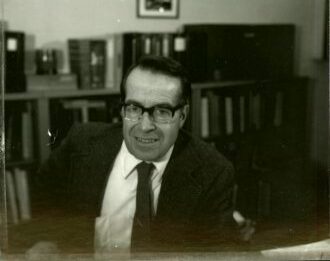
NOCSAE’s first chief investigator was Dr. Voight Hodgson, Director of the Gurdjian-Lissner Biomechanics Laboratory in the Department of Neurology at the Wayne State University School of Medicine in Detroit. Wayne State had become a world leader in head injury research since the 1950s. Hodgson was recognized as an authority in the field. He was also a proponent of developing and using a humanlike headform instead of the metallic head model that was being used in automobile crash testing.
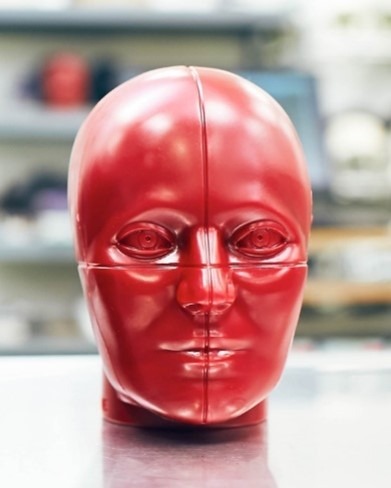
Unlike the existing headforms which were simply hollow metallic heads, this new humanlike (or biofidelic) headform was solid with a glycerin-filled cavity where the brain would be and had smaller cavities in the area of human sinuses. The outside was covered with a urethane rubber that mimicked skin’s response to impacts. This new headform was also the first variable mass headform that matched the average head mass of humans by age.
Once the initial research was finished the work of establishing a football helmet standard began. Scientists at Wayne State University, under the direction of Hodgson, developed a test system that could simulate impacts to the helmet at various impact speeds and locations. The system required fitting a helmet on the new biofidelic headform and measuring head acceleration forces at various speeds and location. The resulting measurements were compared to existing head injury criteria, specifically the Gadd Severity Index, or SI.
These innovations made it possible to create the first NOCSAE test standard, the “Standard Method of Impact Test and Performance Requirements for Football Helmets,” which was published in 1973. NOCSAE’s football helmet standard has been revised over fifty times since it was first developed. All NOCSAE standards are updated as new data becomes available and science advances.
Equipment designed for the initial certification tests was installed in manufacturing plants and manufacturers assumed responsibility for certification of compliance with NOCSAE standards. The option to self-certify compliance was ended in 2015 when NOCSAE began requiring helmet model certification through an organization accredited by the ANSI National Accreditation Board as a certifying body. The Safety Equipment Institute (SEI) was selected. SEI is accredited to ISO/IEC 17065, which is the international standard for certifying bodies.
Reconditioners Began to Test Helmets
In 1975 one of the largest helmet reconditioning companies made the decision to test their customers’ football helmets using a NOCSAE drop test rig. Most of these helmets tested were made before the NOCSAE standard was in existence. The results were striking: 84% of used helmets failed the test.
NOCSAE recognized the value of expanding helmet testing to include helmets that were in-use by athletes. It was clear that providing a formalized process for testing previously certified helmets was needed. The National Athletic Equipment Reconditioner’s Association was formed, and NAERA representatives joined NOCSAE’s board in 1976. The next year, a second NOCSAE football helmet standard was developed to provide for recertification of helmets by reconditioners. NOCSAE became, and remains, the only sport standards organization to provide a specific standard and process for equipment recertification.
Head Injury Reduction
NCAA rules mandated the use of certified helmets beginning with the 1978 season. The NFHS required the use of helmets certified to the NOCSAE standard for high school play beginning with the 1980 season.
By 1985 there was a significant downward trend in head injury fatalities across all football levels, leading to zero deaths during the 1990 season for the first time since 1931, when official tracking of fatalities began.
Concussion injuries also fell. This is not to say that NOCSAE’s football helmet standard was the only factor driving down head injury. Other factors which played significant roles were:
- rules and enforcement against spearing as well as other rules changes
- coaches teaching the proper fundamentals of blocking and tackling
- much improved medical care.
The decline in fatal head injuries and concussions was gratifying to a group which had confidence that helmets made and maintained to a demanding head injury standard for severe head injuries would also have a protective effect against other brain injuries, such as concussion.